|
|
|
|
|
PATRICIA BROWN, KTI
Express Travel and Tours, Sierra Leone.
Patricia Brown is a Certified Travel Counsellor (CTC) from the
Travel Institute of Massachusetts. She is an African Diaspora
Tour Operator and Managing Director of KTI Express Travel and
Tours in Freetown, Sierra Leone. She is also the President of
the Sierra Leone Association of Travel and Tour Operators (SLATTO).
For the past twenty years, Patricia has worked to evoke the
interest of people of African descent in Africa, particularly
people who may trace their roots to her home country of Sierra
Leone. She is an award-winning tour operator, receiving the 2002
Responsible Tourism to Africa Award from ATA.
KTI Travel and Tours is professional tour operator specializing
in adventure holidays for international tourist operators and
travel agents in Sierra Leone. With over 30 years of combined
experience in travel and tourism, we pride ourselves in offering
a professional service with highly trained tour guides.
YouTube KTI
Travel Video
KTI EXPRESS TRAVEL contact:
TOP 5 THINGS TO DO IN SIERRA LEONE WEST AFRICA

Outamba-Kilimi National
Park
The Outamba-Kilimi National Park is Sierra Leone’s only
National Park and also a top spot for beautiful scenery and
fascinating wildlife. Situate in the very north of the country, the
National Park is set amidst the undulating hills, ancient
rainforests and meandering rivers there is an abundance of native
flora and fauna. Outamba-Kilimi National Park is the perfect place
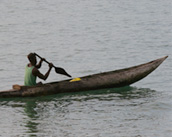
to watch wildlife in its purest form. There are no roads so hiking
and walking are the best options for exploring, as is a canoe trip
along the rivers.
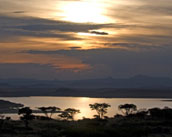
There are over 260 different bird species across the park and Lake
Idrissa such as the endangered Pallid Harrier, plovers, egrets,
sandpipers, herons and cattle egrets visit the area. There are nine
primate species including four that are severely endangered
including the Western Chimpanzee, the Red Colobus Monkey, Black and
White Colobus Monkey and the Sooty Mangabey. There are also Western
elephants, leopards, pigmy hippopotamus, water chevrotain, Maxwell
Duiker and Savanna Buffalo to be found here.
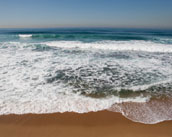
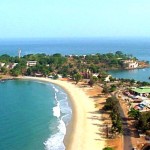
Beaches and Surfing in
Sierra Leone
The beaches of Sierra
Leone and in particular on the Freetown Peninsula are considered
some of the best in Africa. They offer a plethora of activities to
keep visitors busy. Surfing has become a must try in this area. The
perfect climate and pristine beaches offer an amazing surf
experience. The smaller waves of Bureh Beach allow novice surfers
the chance to hone their skills. While just South of Freetown, at
River #2, experienced surfers well get a chance to catch some larger
waves. The unspoilt beaches of Sierra Leone are gorgeous and the
views of surrounding mountains are spectacular. Most importantly,
most of the pristine beaches are deserted depending upon the time of
year you visit. When it comes to surfing and beaches, Sierra Leone
is a one stop destination!
Tiwai Island
Tiwai Island is the premier conservation park for
researchers and eco travellers alike. Visitors can witness the sheer
beauty of the local nature first hand. The island can be reached by
traveling down the Moa River. Tiwai Island has two stunning beaches
in which you can experience pristine sands beside the alluring Moa
River. The forest within the island offers boundless hiking and
climbing trails which will bring you in contact with a concentration
of various plants and animals. There are multiple species of
primates including the endangered Columbus monkey and wild
chimpanzees. There are also over a hundred species of exquisite
birds to admire. Visitors should be prepared to stay in local
lodgings and experience the culture of Tiwai Island.
Explore the culture and
nightlife of Freetown
Freetown is the capital of Sierra Leone and is the main
city for commerce and culture. It is the perfect place to experience
the laid back sandy beaches of Sierra Leone and mingle with the
locals. Expect all the modern tourist amenities such as hotels, late
night hot spots and restaurants especially in the Lumley and
Aberdeen areas which are very tourist-friendly. However, there is
still plenty of traditional West African culture to soak up. Visit
the St John’s Maroon Church which was built in 1800, St George’s
Cathedral and The Wharf Steps and Old Guard House which were both
constructed in 1818. Travellers can visit various markets to dine on
local specialities and witness the beauty of Freetown through local
city tours. Every year the city hosts cultural events to capture the
deep history of the region. A visit to Freetown will impart a piece
of Sierra Leone to someone searching for a perfect cultural
vacation.
Western Peninsula
Rainforest
The Western Peninsula Rainforest lies on the very western
tip of Sierra Leone. This stunning rainforest borders gorgeous
beaches and offers tourists face to face encounters with nature.
Walking trails can bring one in touch with hundreds of species of
animals and plants. The views of the mountainous region are
breathtaking and should not be missed. Most trips into the region
allow for a modern shelter with camping amenities. Meals are
prepared onsite and include the local flavour of Sierra Leone. What
better way to experience the majesty of the rainforest than staying
on the very edge of nature?
RADISSON BLU MAMMY YOKO OPENS IN SIERRA
LEONE
Posted on April
27, 2014 by admin

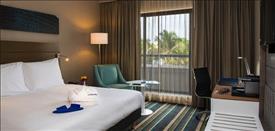
Carlson Rezidor Hotel Group has opened the
Radisson Blu Mammy Yoko Hotel, Freetown – the very
first 5-star hotel in Sierra Leone, Africa.
Featuring 172 guest rooms and suites, the brand new
property is named after Mammy Yoko, the “Queen of
Senehun” who helped to unite the Kpaa Mende region.
Carlson Rezidor is one of the leading international
hotel operators in Africa – all across the continent
the group operates and develops 53 hotels with more
than 11,500 rooms in 22 countries.
“We are delighted to welcome the Radisson Blu
Mammy Yoko Hotel, Freetown to our growing family and
to further strengthen our presence in Africa, one of
our key development regions. We focus on profitable
and asset-light growth especially in emerging
markets, and aim to make Radisson Blu the premier
upper upscale brand on the African continent”, said
Wolfgang M. Neumann, President & CEO of Rezidor.
Freetown is the largest city and capital of
Sierra Leone. The Radisson Blu Mammy Yoko Hotel is
situated in a very convenient area and offers direct
access to Lumley Beach, one of Africa’s finest coast
lines. The white sandy beach faces the Atlantic and
it is lined by a promenade that gives access to
shops, restaurants, golf courses and clubs.
The 172 designer guest rooms and suites at the
Radisson Blu Mammy Yoko Hotel invite guests to relax
in style and modern comfort. The hotel includes 156
Standard, Superior and Business Class rooms, as well
as six Executive Suites, nine Deluxe Suites and one
lavish Presidential Suite. All rooms offer Radisson
Blu signature services such as free high speed
internet access, and many of them feature lovely
garden or sea views.
Enjoying a drink or a meal soaking the Atlantic
breeze is a unique experience: The Radisson Blu
Mammy Yoko Hotel has an enviable terrace of almost
500 m2 that hosts the atmospheric Deck restaurant
serving delicious international cuisine, fresh fish
and seafood. In addition, the restaurant gives
Freetown its first Sunday Buffet Brunch, reflecting
international standards of hospitality at this
contemporary hotel.
Freetown is home to many national government
bodies and to all foreign embassies in the country –
and is the most important business and financial
centre in Sierra Leone. For meetings and events, the
Radisson Blu Mammy Yoko Hotel offers five
state-of-the-art conference rooms from 35 to 260 m2
that can accommodate up to 260 delegates.
Sierra Leone becomes a tourist hotspot and the
country is set to reclaim its crown again as the Athens of West
Africa
 2012
-The West African country of Sierra Leone is witnessing a dramatic
change of fortune. Tourists from the UK, US, European and Asian
countries are making the capital Freetown their prime holiday
destination after tour operators recently discovered the huge
tourist potential this small African country has to offer. Thousands
of tourists are booking flights long in advance for upcoming
holidays as news begin to filter around the tourist world about this
little holiday gem that is poised to take the world by storm. 2012
-The West African country of Sierra Leone is witnessing a dramatic
change of fortune. Tourists from the UK, US, European and Asian
countries are making the capital Freetown their prime holiday
destination after tour operators recently discovered the huge
tourist potential this small African country has to offer. Thousands
of tourists are booking flights long in advance for upcoming
holidays as news begin to filter around the tourist world about this
little holiday gem that is poised to take the world by storm.
The Sierra Leone government is taking steps to meet the sudden rise
in demand for hotel rooms and resorts that are geared for an
overwhelming influx of visitors this summer. This government has
worked very hard to showcase the potential of its country and
recently held an investment conference where the world’s leading
investors were presented with a showcase of what this country has to
offer
Little did the world knew that the most beautiful beaches with pure
white sands and untouched coastline were located on this Portuguese
discovered land of beauty. The immaculately trimmed natural harbour
is one of the most visible landmark of the country’s beauty as one
enters the coastline of this small paradise. Sierra Leone’s beauty
was first discovered by a Portuguese explorer, Pedro Da Cinta, by
accident. And the country’s history documented how this explorer
thought he had taken the wrong route to another part of Europe. He
had to contend with the geographical position of his compass and
come to terms with the fact that he must be witnessing a miracle. He
was face to face with one of the most beautiful discoveries of his
navigational tour around the world.
Not only does the country provide an unprecedented natural beauty to
its visitors, it matches it’s amazing scenery with an untapped
precious mineral deposit that boasts some of the finest Diamonds
ever mined in the world. The Star of Sierra Leone is one of the
largest and most beautiful diamond the world has ever seen. In fact
oil has just been discovered in a country that is already a leading
exporter of Bauxite and Iron Ore.
5 star hotels employ a tantalizing scenery as one tours the blue-sea
coated sandy beaches. The sudden calmness that greets the visitor
would leave an awesome temptation to make you think you have
accidentally landed in paradise. Visitors might be tempted to
overstay their visas and are highly advised to make proper consular
arrangements. Sierra leone has some of the most beautiful women in
the world with curvelines that make models at the New York Fashion
show look like a joke!
This dramatic transformation the world is witnessing has been
largely due to the unflinching commitment by the country’s Head of
State who has identified the key benefits of an overhaul in the
country’s tourist industry. The government’s commitment to tourism
cannot be over-emphasised. President Ernest Bai Koroma is ensuring
that tourism plays a significant part in his Agenda for Change and
is lobbying very hard that stakeholders make the development of the
country’s tourism industry a priority.
Sierra Leone’s President Koroma has backed plans to make the
75,000-hectare Gola Forest his country’s second national park, and
thus protecting more than 50 mammal species including leopards,
chimps and forest elephants, 2,000 different plants and 274 species
of bird of which 14 are close to extinction. The area, close to the
Liberian border, will become the flagship site in a new national
park network with local communities paid annually to replace
royalties linked to logging and diamond mining in the forest.
The European Commission and French government are both contributing
more than £3 million towards the training of more than 100 staff to
patrol Gola’s boundaries, monitor wildlife and run education
programmes. Scientists will be encouraged to study the wildlife of
the area which is expected to become a hub for eco-tourism in the
country. President Koroma is planning to establish six more national
parks in Sierra Leone to develop tourism as the country prepares to
fully embrace eco-tourism.
Visitors are assured of a pleasant trip and a beautiful stay as the
infectious warmth and kindness of the people will surely leave an
indelible impression that will see the return of many in holydays to
come.
By Kamara
|


 ...
...