We are thrilled to welcome you to the Kingdom, a gem
ensconced between sub-Saharan lands. Here, you'll
discover four different geographies and countless ways
to experience them.

Top Swaziland Activities for every travel desire
Hiking: Swaziland is one of the most beautiful
destinations in Africa, and its diverse landscape is
best viewed from the top. Hit one of the country’s
renowned hiking trails to get a birds-eye view of
the country – from its verdant hills and
savannahs and its mountain ranges and bustling
villages.
White water rafting: White water rafting is one of
the leading Swaziland Activities on offer, and
you’re invited to take to the rapids to experience
it for yourself. You don’t need any experience – in
fact, you don’t even need to be a swimmer – but you
will get wet! For any traveller seeking a true Swazi
adventure experience, white water rafting on the
Great Usutu River is not to be missed.
Horse-riding: Many Swaziland attractions have been
designed to take full advantage of the country’s
breathtaking beauty, and horse-riding in Swaziland
is no exception. Via horseback is the ideal way to
experience the peace and tranquillity of the
country, as well as the lush beauty that defines the
land.
Mountain climbing: From the slopes and mountain tops
of Swaziland’s sweeping ranges, you’ll experience
the panoramic views for which the country is famed.
From this vantage point, take in the rural villages,
diverse vegetation and rustic charm of the kingdom.
Superb walking and hiking trails are to be found in
the Malolotia Nature Reserve, situated in the Swazi
highlands. Browse Swaziland Hiking sites.
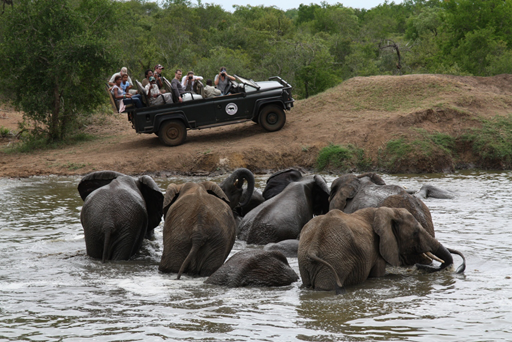
Safaris and Game Parks: In Swaziland, there’s a
notable concentration of Big Five animals, which are
best viewed in the region’s game parks and reserves.
Some of the most popular wildlife reserves are the
Mkhaya Game Reserve, Hlane Royal National Park,
Malolotia Nature Reserve and the Mlilwane Wildlife
Sanctuary. These parks enable visitors to explore
indigenous fauna and flora at close range, providing
fantastic viewing and photographic
opportunities. Browse Swaziland Safaris and Game
parks.
Bird-watching: One of the premier
Swaziland attractions is bird-watching, as the
country is known for its vast assortment of
feathered species. More than 500 species have been
identified in the small country, making it a
paradise for bird-watching enthusiasts. The Hlane
Royal National Reserve is home to Africa’s largest
concentration of whitebacked vultures, while the
Mlawula Nature Reserve and Mbuluzi Game Reserve
feature 350 and 400 bird-types respectively.Browse bird watching
sites here .
Eating out: A variety of restaurants and foods are
available in Swaziland, and fare caters for every
taste. From delicious local fare to more common
western offerings.
White-water rafting
Is the most popular activity in Swaziland.Excitement
on the Great Usuthu River ( the largest river
flowing through Swaziland) is a definite " must-do"
activity in Swaziland. 2-man inflatable croc-crafts
are safely guided down the river. This challenge is
suitable for absolute beginners as well as seasoned
adventurers. During the low season a combination of
abseiling, kloof jumping and rafting keeps
adrenaline on a high. A picnic style lunch and
refreshments are enjoyed on the side of the river.
Half or full day options available. Contact Swazi
Trails for bookings on: (+268) 24162180 or after
hours on: (+268) 7602061. on email:
info@swazitrails.co.sz
Swazi Trails - detailed info: http://www.swazitrails.co.sz
Swazi Trails - online booking:
http://www.swazi.travel
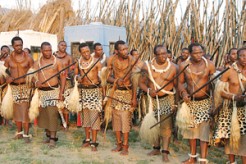
The Incwala, or first fruits ceremony, in which the
King plays a dominant role, is the most sacred of
all the Swazi rituals. It is held in December or
January on a date chosen by astrologers in
conjunction with the phases of the moon and sun.
The ritual begins with a journey by the “Bemanti”
(people of the water) to the Indian Ocean to collect
water and on their return to the royal kraal, the
little Incwala begins, on the new moon.
At the full moon, youths from all parts of the
kingdom travel to collect the sacred branches of the
“lusekwane” shrub, a species of acacia. On the third
day a bull is ritually slaughtered by the youths,
instilling solidarity among them and a spirit of valour.
The fourth day is the culmination of the Incwala
when the King, in full ceremonial dress, joins his
warriors in the traditional dance. He then enters a
special sanctuary and after further rituals, eats
the first fruits of the season. On the appearance of
the King to his people, they may also eat these
fruits with the blessing of the ancestors.Certain
parts of the Incwala may not be witnessed by outside
people and it is vital to have a permit to take
photographs within the proximity of the royal cattle
byre.
The Umhlanga (or Reed Dance) takes place in late
August or early September each year. It is a dance
which attracts young maidens from every area of the
Kingdom and provides the occasion for them to honour
and pay homage to the Queen Mother (iNdlovukazi).
Most of the participants are teenagers, although
some of the girls are younger. Over 20 000 maidens
gather reeds from selected areas which they present
to the King and the Queen Mother.

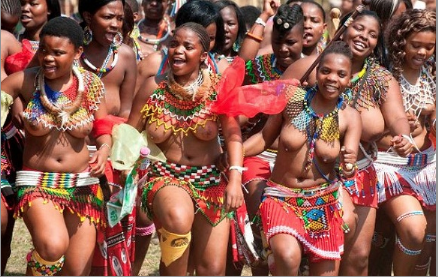
THIS AUGUST WILL SEE A
HIVE OF COLOURFUL ACTIVITY IN THE TINY KINGDOM
OF SWAZILAND - IT IS THE BEGINNING OF THE
ANCIENT "UMHLANGA" OR ANNUAL REED DANCE FESTIVAL
This ceremony is a centuries old tradition where the
Kingdom’s unmarried and childless females present
their newly cut reed to the Queen Mother to protect
her residence.
Dates of the event are set only a few weeks in
advance. When the right day arrives, young women
from all over Swaziland and beyond her borders
converge on the royal residence in Ludzidzini for
this momentous occasion.
Maidens gather in groups and head out along
riverbanks to cut and collect tall reeds, bind them
and return to Ludzidzini, the Royal Homestead in
Lobamba.
Tens of thousands of maidens, led by Swazi
princesses, provide a sea of colour as they dance
and sing, proudly carrying their cut reeds.
Traditionally, virginity is a pre-requisite for
participation as it is considered taboo for an
‘impure’ woman to cut the reed.
Residents of this tiny mountainous Kingdom are
intensely proud of their deep culture and taking
part in the Festival is a proud and privileged
moment for all the family.
The highlight of the event is the reed-giving
ceremony - one of Africa’s largest and most
colourful cultural spectacles. The maidens gather at
Ludzidzini dressed in traditional attire; bright
short beaded skirts with colourful sashes revealing
their bare breasts to dance and sing and celebrate
the unification of the Kingdom’s women. His Majesty
King Mswati lll joins the celebrations to pay
tribute to the maidens.
At the end of the day, the maidens present their cut
reeds to the Queen Mother, Ndlovukazi, and the
protective Guma (reed fence) around her homestead
will be rebuilt.
The Umhlanga Festival is a visual spectacle that
bonds this small but perfectly formed nation. Its
ever- increasing popularity defies the apparent
decline of traditional cultures elsewhere in Africa.
Witnessing this festival is a truly unique
experience. Visitors are welcome, but are vastly
outnumbered by the participants! This is a
traditional event that allows spectators, not one
that exists for spectators.
See it for yourself and experience Swaziland’s
unique blend of ancient culture, pristine
wilderness, year round wildlife and spirit of
adventure.
PRESS RELEASE 27/3/2012
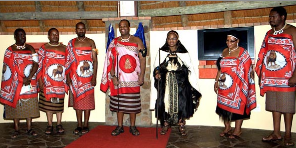
His Majesty King Mswati III and Her Majesty
Indlovukazi provided their Royal approval for the
opening of the Magadzavane Tourism Complex in Mlawula
this week along with members of the Swaziland
National Trust Commission board.
Newly-appointed Tourism Minister Mduduzi ‘Small Joe’
Dlamini helped the King to present a gift to
Taiwanese Ambassador, Peter Tsai. Representatives of
the different companies which were involved in
the construction of the complex also got an
opportunity to pose with Their Majesties.
Nestled within Mlawula Nature Reserve, Magadzavane
is situated 16km from Siteki, near the Goba/Mhlumeni
border, offering spectacular views and tranquil,
relaxing environment.
The resort comprises forty en-suite units,
restaurant, bar, conference centre and swimming pool
with a breathtaking views over the Lubombo mountains.
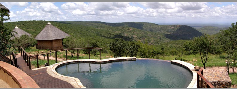
It is also an ideal stop-over point for visitors
travelling to and from Mozambique. Activities within
Mlawula Nature Reserve can be enjoyed by visitors
staying at the lodge, which include game viewing
including sightings of elephants, buffalo, hippo and
cheetah as well as more elusive leopard, pangolin
and honey badgers.
Guests can also enjoy hiking trails, picnics,
mountain biking, bird watching and fishing, there is
also a spacious main camp for tents and caravans.
The reserve lies within the transitional zone
between Swaziland’s two bio geographic regions, the
dry thorn savannas of the west, and the lush coastal
thickets of the east. The reserve consists of three
distinct ecological zones, the Ndzindza plateau, the
Siphiso Valley and the rhyolite ridges of the
western boundary.
Although small, the reserve is contiguous with other
protected areas (Mbuluzi and Simunye Nature
Reserves, Hlane Wildlife Sanctuary), and other areas
of natural vegetation (north bank of the Mbuluzi
River, Mhlumeni area, adjacent area in Mozambique).
For further information on Swaziland contact us on +
44 (0)115 9727250 or email: swaziland@geo-group.co.uk

 .
.
 .
.