We
have 100s
of photos
from ATA's 30th World Congress and tours, plus
photo stories of world famous athletes such as Dr.
Kipchoge Keino, head of Kenya's National Olympic
Committee. Details
. Advertise
LETTER FROM AFRICA: KENYA'S INSPIRING
"EXPORTS"
27 JULY 2015
In our series of Letters from
African Journalists, film maker and
columnist Farai Sevenzo considers
some of Kenyas's greatest "exports"
There may really only be one
story in town if your town is
Nairobi and you happen to be a
sports fan.
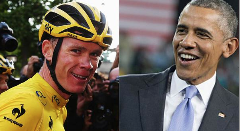
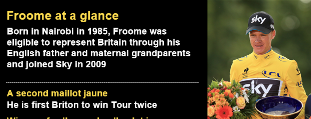
Chris Froome has won the
Tour de France - a
competitive, gruelling and
punishing race by bicycle
that takes the rider up
mountains in all manner of
weather over many days - and
he has won this race for the
second time in his
ridiculously young life.
If you are a sports fan in
Nairobi you will know that
this cycling champion was
born in the Kenyan capital
30 years ago and represented
Kenya in many cycle races
before competing for his
father's homeland - the
United Kingdom.
You will know too that his
mentor and training partner
well into his twenties was
the Kenyan professional
cyclist David Kinjah.
In the same city this last
weekend another man, who has
been in the fabric of our
newsreels almost
continuously for the last
seven years, landed in his
father's homeland for the
first time as president of
the United States of
America.
Gone was the anonymity of
his previous trips as a
young man who sat outside
his father's village huts
with a cigarette in hand,
instead a swoon fest was
gripping Nairobi as
politicians and ambassadors
fell over to be in his
presence; and the men in
charge of security had a
hernia or two.
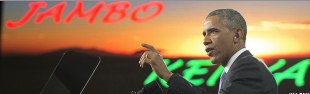
Barack Obama told a
gathering on Saturday night:
"Obviously there are
emotions to a visit like
this, memories come rushing
back."
He recounted how he had once
written to his father and
told his Kenyan parent of
his hope to visit.
"And he wrote me back
saying, 'Dear son, even if
it's only for a few days,
the important thing is that
you know your people," the
US leader told his audience.
For the cyclist and the
president, "their people",
are clearly delighted at
what the fates have sprung
from their soil, despite
America and Britain's
eagerness to claim these two
men for themselves.
And yes, we know that Africa
is "on the move", as Mr
Obama put it.
From Harare to Hargeisa you
would be a very unlucky
person not to bump into a US
dollar millionaire.
The entrepreneurs are
throwing up ideas, the
technological future is
being harnessed by bright
young African minds and the
superpowers from Beijing to
Washington are well aware of
the dormant economic clout
of a continent with a rising
middle class and rich
resources.
Both Froome and Mr Obama are unlikely
fruit from the Kenyan tree - which
clearly has a steely determination as
one of its attributes.
The cyclist was
born in Kenya, studied in South Africa
and has been on his bike longer than
most footballers have been kicking a
ball.
We learn too that
he has been subjected to a torrent of
abuse during this tour - allegedly urine
has been thrown at him as he raced
because of allegations of doping.
As the
next US election gathers steam
and the son of a Kenyan prepares
to leave the stage to set up his
presidential library, pens are
being sharpened to sum up the
Obama presidency. No write up
will be complete without the
words "against all odds" .
So when
it comes down to it, Africa's
secret weapon is in her people
and their offspring who, when
champions and influential
leaders sprout from the same
place, remind us all that we are
more than the sum of the
headlines.
SATURDAY, APRIL 25, 2015
By PSCU
KENYA IS SAFE FOR
TOURISM, NO NEED TRAVEL ADVISORIES WORLD
TOURISM CHIEF SAYS
UNWTO EXPRESSES
ITS FULL SUPPORT FOR KENYAN TOURISM
Apr 29, 2015
During a recent visit to Kenya,
UNWTO Secretary-General Taleb Rifai
expressed the organization’s full
confidence in the country’s tourism
sector and its capacity to recover
(April 25, 2015).
In solidarity with Kenya and its
people, and on behalf of the
international tourism community,
UNWTO Secretary-General Taleb Rifai
visited the country to highlight the
economic importance of the Kenyan
tourism sector, and convey his
confidence in its strong resilience.
“Kenya is a true tourism success
story and a long-term tourism
leader, not only in Africa but
globally. Over the years, the Kenyan
tourism sector has become a backbone
of the national economy and
demonstrated a remarkable capacity
to recover and regain momentum,
which is why I have full confidence
in its ability to bounce back even
stronger. The world must hear from
Kenya now. Kenya, with Africa, will
move forward”, said Mr. Rifai.
On the occasion, Mr. Rifai met with
the President of Kenya, Mr. Uhuru
Muigai Kenyatta, to explore further
areas of cooperation between Kenya
and UNWTO, as well as the importance
of domestic tourism, increased
regional cooperation, and the need
for more precise travel advisories.
Mr. Kenyatta confirmed the
Government’s commitment to keep
advancing the tourism sector also in
these trying moments, and
highlighted the importance of
co-existence and working closely
with neighboring countries to
stabilize and promote East Africa.
“Terrorism is
not a Kenyan issue, it is a global
issue.
We just happen to live on the front
line. We will not change our plans
but rather work towards eradicating
the problem and to protect our
people”, said Mr. Kenyatta.
Mr. Rifai also met with the Cabinet
Secretary for East African Affairs,
Commerce and Tourism, Phyllis Kandie,
and the tourism task force, to
further explore how UNWTO can assist
public and private sector efforts to
recover and consolidate Kenya’s
tourism sector. At a joint press
conference with Mrs. Kandie, Mr.
Rifai reiterated UNWTO’s strong
support to Kenya:
“Sometimes when we live in a country
we do not see how the world sees us.
The world has great respect for
Kenya, as do the international
tourism community. I want to assure
you that we will do our part to help
restore full confidence in this
incredible destination”, concluded
Mr. Rifai.
KENYA TOURISM NOW IN RECOVERY MODE
BY PROF. DR. WOLFGANG H. THOME, MAY 29, 2014
The Kenya Tourism Board (KTB) is clearly wasting
no time to take the battle for market recovery
and to lure more tourists from the world, by
courting existing, new, and emerging markets, as
KTB today announced the dates for their Magical
Kenya Travel Expo.
The Kenyatta International Convention Centre
will once again be the venue for Kenya’s premier
international tourism fair, allowing the
showcasing of all of the country’s varied
attractions, from the sun-drenched beaches of
the Indian Ocean to the shores of Lake Victoria,
from Tsavo and Amboseli to Lake Turkana, and
from Mt. Kenya to the Masai Mara and everywhere
in between, including the UNESCO World Heritage
sites in the Great African Rift Valley; lakes
Elementaita, Naivasha, Nakuru, Bogoria, and
Baringo; and the conservancies on the Laikipia
plains and beyond which are at the forefront of
private wildlife conservation.
The dates for the 2014 event were announced as
October 8 to 10 inclusive, and this year, some
150 top-rated buyers from the key markets
supporting Kenya’s tourism industry will be
invited and hosted by the Kenya Tourism Board,
to showcase the country as fundamentally safe
for visitors and ready to provide that
once-in-a-lifetime holiday.
Also invited will be selected international
media houses, travel magazines, and travel
publications to send their correspondents to get
a feel for Destination Kenya and meet some, if
not all, of the 120 exhibitors who are expected
to sign up for the event, interact with
exhibition visitors, and, of course, the buyers
who are expected to sign major contracts for
safaris and beach holidays with their Kenyan
counterparts.
Partner countries Uganda, Rwanda, and Burundi,
will be standing by Kenya to offer their support
for the event, and other tourism boards are
expected to exhibit once again from the
Seychelles, South Africa, Zimbabwe, and India,
which drew large crowds last year. Additional
African tourism boards are also expected to come
to Nairobi, both as a sign of solidarity with
their Kenyan colleagues and as an opportunity to
showcase multi-center safari vacations.
KENYA'S TOURISM SECRETARY
ANNOUNCES 10 POINT PLAN TOWARDS RECOVERY
BY DR. WOLFGANG H. THOME, ETN UGANDA | MAY 24,
2013
‘I have come up with a ten point plant
highlighting the areas that we shall
prioritise going forward.
These include streamlining the boards of
State corporations in tourism, hastening the
implementation of the Tourism Act and
setting up a tourism market recovery
programme to recover Kenya’s lost market
share in tourism. The national tourism
strategy is at the moment being crafted and
will be in place in the next few months’ was
Mrs. Phyllis Kandie, the new Cabinet
Secretary for East African Affairs, Commerce
and Tourism, previously known as Minister,
quoted to have told a meeting of tourism
stakeholders, who were anxious to hear what
government had in store to revive the
flagging fortunes of the country’s tourism
sector. Former tourism minister Mwazo, now
openly described as the worst in Kenya’s
history, had like a bull in a china shop
caused havoc and left the sector’s political
administration in the proverbial tatters,
before making his escape to a senatorial
seat in the last elections
Of key interest for the sector were, as
recently mentioned in a related development,
infrastructure developments like the
completion of a road between Narok and the
Masai Mara Game Reserve, the bypass from the
Nairobi – Mombasa highway and the Moi
International Airport to the south coast
and, as one source put it: ‘… to get us the
funding KTB needs to run a recovery
marketing campaign across the world. Last
year Mwazo just make empty promises on which
he failed to deliver and you see where we
now are. The man was just incompetent and
good riddance is all I can say. If he had
delivered on his promises to get tourism the
funding required we would be better off and
now we have to clean out after him. Well,
the new boss in tourism has shown she got
the message and we will now wait and see how
she delivers on her 10 point plan’.
Keenly awaited now are the upcoming
announcements on who will chair the boards
of several new parastatals which were
created under the tourism act, although
there are already whispers emerging from
within key stakeholders that perhaps the
formation of a single tourism authority
would serve the sector better than a
fragmented regime of several bodies, which
could well lead to sectoral infighting over
turf claims instead of all pulling into one
direction. ‘The creation of many parastatals
was a result of the grand coalition of the
last government needing to create a lot of
jobs for cronies. Now that we have a single
government again, maybe we should revisit
some of those issues and seek a better way
forward. Tourism authorities are working
well in other countries like Zimbabwe, and
from what I know Tanzania is looking at
creating one too. Right now we have a
situation of many chiefs. The recurrent
expenditure will be high and eat into the
marketing budget. It is something we need to
improve upon’ added the same source, setting
the scenario for what will be an interesting
year ahead for Kenya’s tourism industry.
Watch this space for regular updates on
what’s on in tourism from across the region.
KENYA PRESIDENT
VOWS 3 BILLION KENYAS SHILLINGS FOR TOURISM
BY DR. WOLFGANG H. THOME, ETN CORRSESPONDENT,
AFRICA | AUG 05, 2013
President Kenyatta took time out to see
the great migration over the weekend,
when he visited the Masai Mara Game
Reserve in the company of Phyllis Kandie,
Cabinet Secretary for East African
Affairs, Commerce and Tourism; the
ministry’s PS Mohammed Ibrahim; and the
CEO of the Kenya Tourism Board, Mr.
Muriithi Ndegwa.
President Kenyatta, while at the Mara
Serena Lodge, reassured the tourism
sector that his government had set aside
some 3 billion Kenya shillings (over
US$34 million) to allow for vigorous
marketing of the destination in
existing, new and emerging destinations,
aimed to bring in significantly higher
numbers of tourist visitors to the Kenya
coast and the safari parks. He was
quoted to have said that over the coming
5 years visitor arrivals need to rise to
5 million per annum.
This is seen as a direct response to the
growing concern by private and public
sector when parliamentarians tried to
shift 2 billion of the budget estimates
to other areas, which would have left
KTB and the ministry cash strapped and
almost unable to fulfill their mandate
and roll out the planned recovery
marketing campaign.
Latest arrival statistics show that the
decline in visitor numbers has now
bottomed out and for the second half of
the year a rise in tourists coming to
Kenya is expected.
The President also, during his visit to
the Mara, addressed issues concerning
poaching and how best to combat it,
which includes the new Wildlife Bill set
to introduce heavy fines and longer
prison terms.
 .
.




 We
have 1
We
have 1
.png)